Tolley’s Tax Deformity – a new disease?


I am slightly concerned about these…growths that I’ve found on my Tolley’s Tax Handbooks…what could be in there?

Are they buboes? Should I be using the Medieval approach of protecting myself with sweet smelling nosegays?
Is it the sign of an infestation of book-flesh eating bugs? Will they eventually burst out from the spines in a spray of paper shreds? Like the chestburster from Alien, but with more glue, and less blood?
I am afraid.
If you don’t hear from me by the end of January, send in the search parties. Although I’d recommend they be wearing with HazMat suits, probably Type 1.
And bring tongs.

How to make a librarian happy

First, start with a standard handbook for solicitors, available in many varieties, but for this example, make it a Company Law one.

Give it many, many, paper-thin pages, in order to fit the masses of information into it without it becoming large enough to risk it becoming sentient.Then give it a floppy cover: this ensures that, not only is it impossible to make it stand on a shelf itself, but its floppiness is also contagious, and it’ll merrily take out neighbouring books during its slide to the ground.

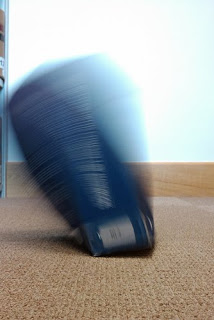
Evidence: an action shot, taken when I tried to get the book to stand upright for a second while I took a photo. And its normal position/look, when placed on a shelf and left to its own devices.
So: with those ingredients, you have created a book that annoys the librarian (as when it’s on the shelf it’s like a limp eel, and a Bad Influence on the other books), and the solicitors (who can’t store them standing upright like the other books on their desk, so they have to lie flat / get buried under paperwork / annoy them when they can’t find them due to the burying).
To make the librarian happy again, you need to do one simple thing: provide stiffer covers. Then the books can do amazing things, see?
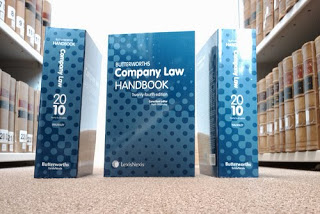
I left them alone, unsupervised, for FIVE WHOLE MINUTES, and came back and they were still upright like that, yay!
Yes, it’s the small things that make us happy…thank you Butterworths, for rescuing my shelves from the Attack of El Collapso.
P.S. The solicitors like them too: drawing most comments so far is the attractive dot design.

Slow reading, and legalese

So, it seems we’re all finding it difficult to concentrate on reading large amounts of text, and getting more easily distracted from….oh, shiny thing!

Ahem…yes, so…I suppose the techniques frowned upon by the Oxford History professor in the article may well be naughty to use when trying to study and analyse literature….but in legal research, they’re a godsend! Databases may well throw up hundreds or thousands of hits when you search for a specific term. Once you’ve narrowed it down a bit more, you’re still left with dozens of articles and cases to wade through. And nobody’s ever claimed that legal language was snappy, or easy to skim.
The ability to go into these items and search for a specific word is great: by being able to find words instantly, and get some understanding of their use in the case or article through looking at the context, discarding irrelevant items is a much faster process.
I’m not a lawyer: I don’t necessarily always understand exactly what it is I’m being asked to find, and despite being a naturally fast reader, I can’t dedicate hours and hours of time to fully go through each article or case that may possibly be relevant to get to that level of understanding. Looking for key words helps me narrow down the material, meaning the lawyer gets what they need, faster.
So yes, slow reading’s a good thing, in the right situation, but reading legalese is already slow enough – I’m taking all the help I can get with that!