Sometimes, you have so much to do, that you can’t see what you’ve actually done. I’m feeling very much that way at the moment, so I thought I’d make a public list for myself of all the work and professional things I’ve done since taking up my role in mid January. Then maybe I’ll feel less like I’m just not very good at anything. It’s worth a try. Although for obvious reasons, I can’t publicly say much about the baddest/hardest stuff, but…it’s in there. Maybe it’s not explicit about how hard it’s been, but it’s there.
So: what have I done?
Service management and development
- Replaced someone who ran the library for 21 years, who retired 3 months before I started, and gave me no handover information.
- Got 6 weeks of company/training on the library from an assistant, who then retired, leaving me as the only person in the organisation who knew anything about how the library actually worked.
- Done the assistant librarian and librarian job simultaneously, while not really knowing anything about them, for a few weeks.
- Trained the assistant librarian (who is awesome) to do their job…which I didn’t really know how to do myself, due to it not being my job. So we figured it out together. Painfully.
- Trained the assistant librarian to do legal research, from the basics on to complex work – again, luckily, they’re awesome!
- Learned about the organisation I work for, its history, and its coverage – I had only worked with civil law before, so I had to learn about criminal law from scratch.
- Learned how to use the LMS for managing stock and circulation items.
- Realised our LMS contract was coming to an end and the product was too costly, so worked with suppliers and Procurement to implement a new LMS (work in progress).
- Decided that the current catalogue data was too unreliable/inaccurate to import to the new LMS, and made the decision to recatalogue all stock from scratch on our new LMS (work in progress).
- Chosen and adapted a new classification system to reclassify all our stock to (work in progress).
- Reviewed my job description, and the assistant’s job description, and updated them to actually reflect what we do.
- Learned how to use the internal appraisal system, to manage assistant’s development needs and professional development plan.
- Created a structure for management of emails and materials coming in to the communal library email account, and being stored there for access by both staff.
- Contacted every supplier of anything to the library, to update the account manager details to me. Sometimes not very successfully (Bloomsbury Professional really, really like sending email to my predecessor, no mater how many times I contact them about it, and they assure me it’s now accurate).
- Supervised the assistant librarian in their review of where every looseleaf that we buy goes to – we’ve cut any surplus spending on unfiled/unused copies.
- Begun the process of asking for my job grading to be reassessed (work in progress).
- Had a lack of support/accurate information when I needed it and asked for it.
- Begun working my way through a datadump of 10 years worth/200 folders worth/800-1000 network files and documents, to learn about how the library was run prior to me starting here.
- Researched the history of the creation of the library to determine who my actual users are meant to be.
- Worked with other departments to determine what others thought the library did, and for who.
- Created a Service Description, to describe and define where the library (and 3 satellite library locations) is located, what the library staff actually do, and who our users are.
- Made sure everyone I speak to knows that they are welcome to use the library, work in the library, and there are user desks/pcs available for them to use here (backed up by a variety of smaller, subtle marketing activities like making sure sweets are available at the service desk).
- Managed access to users of a group-access subscription service, and attended user group meetings.
- Attended a disaster planning event, and a practical training workshop, and used the knowledge from these to partially draft a disaster plan (work in progress).
- Attended an event in London of creating a digital strategy for the library, which gave me lots to think about regarding how to develop the service (work in progress).
- Worked with other departments to start redeveloping the library space on one of the intranets.
- Reviewed every subscription we take to assess usage/relevancy, and cancelled any inefficient/underused subscriptions.
- Attended induction training (local and corporate), attendance management training, change management training, criminal awareness training, and civil awareness training. And completed many hours of compulsory e-learning training. So much time away from working, in training!
- Created training materials on library resources for internal staff who provide cover for the library staff, and provided day-long training to multiple individuals.
- Begun plans to implement the internal staff training on library resources across the wider organisation.
- Written endless business cases, with the content ranging from internet filter proxy settings to professional organisation memberships.
- Maintaining my part of the building – reporting and getting replaced lights that are out, broken/malfunctioning doors, splintering desks, spillages in the coffee area, splatters on the external windows etc.
- Established good professional relationships with other libraries in the vicinity.
- Attended an introduction to bookbinding course, to get the skills to understand how to do basic book repairs.
Oh, and of course, around all this, I’ve done my normal work of dealing with sourcing legal materials and doing legal research! Which, despite what people who come in think, is actually taking up a large amount of the time the assistant librarian and I have available – we suffer from the traditional misapprehension that, if we’re not working for an individual at that point in time, we must not be working at all. If only!
Professional activities
- Visited multiple professional libraries in London and Edinburgh, including the equivalent service in London.
- Hosted the meeting of a local professional group, and given a group tour of the workplace.
- Been involved in a multitude of relevant professional groups, and attended meetings at a variety of locations, from the National Library of Scotland to the Royal Botanic Gardens.
- Given individual tours of the workplace to at least 20 professional contacts.
- Undertaken an Institute of Leadership and Management qualification.
- Registered for Fellowship with CILIP, and begun compiling my portfolio for that.
- Successfully revalidated my Chartership.
- Seen one Chartership candidate successfully submit their Chartership portfolio, and taken on another mentee.
- Co-managed the Informed website, and written information-issue articles.
- Maintained this blog (it’s been a little bit neglected, as a lot of my writing/focus has been on Informed instead).
Physical
- Cleared 30 bags of rubbish out of my office.
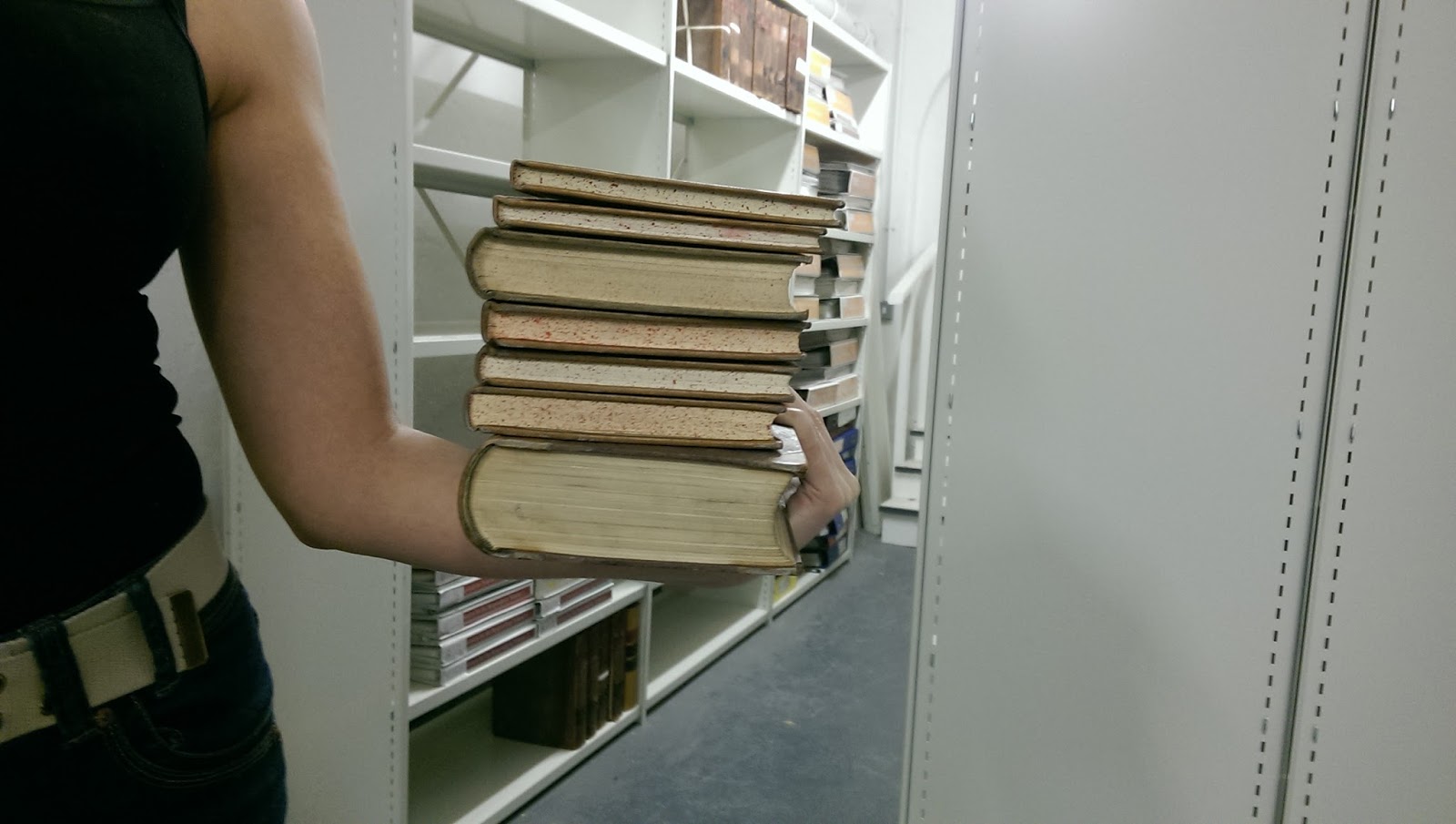
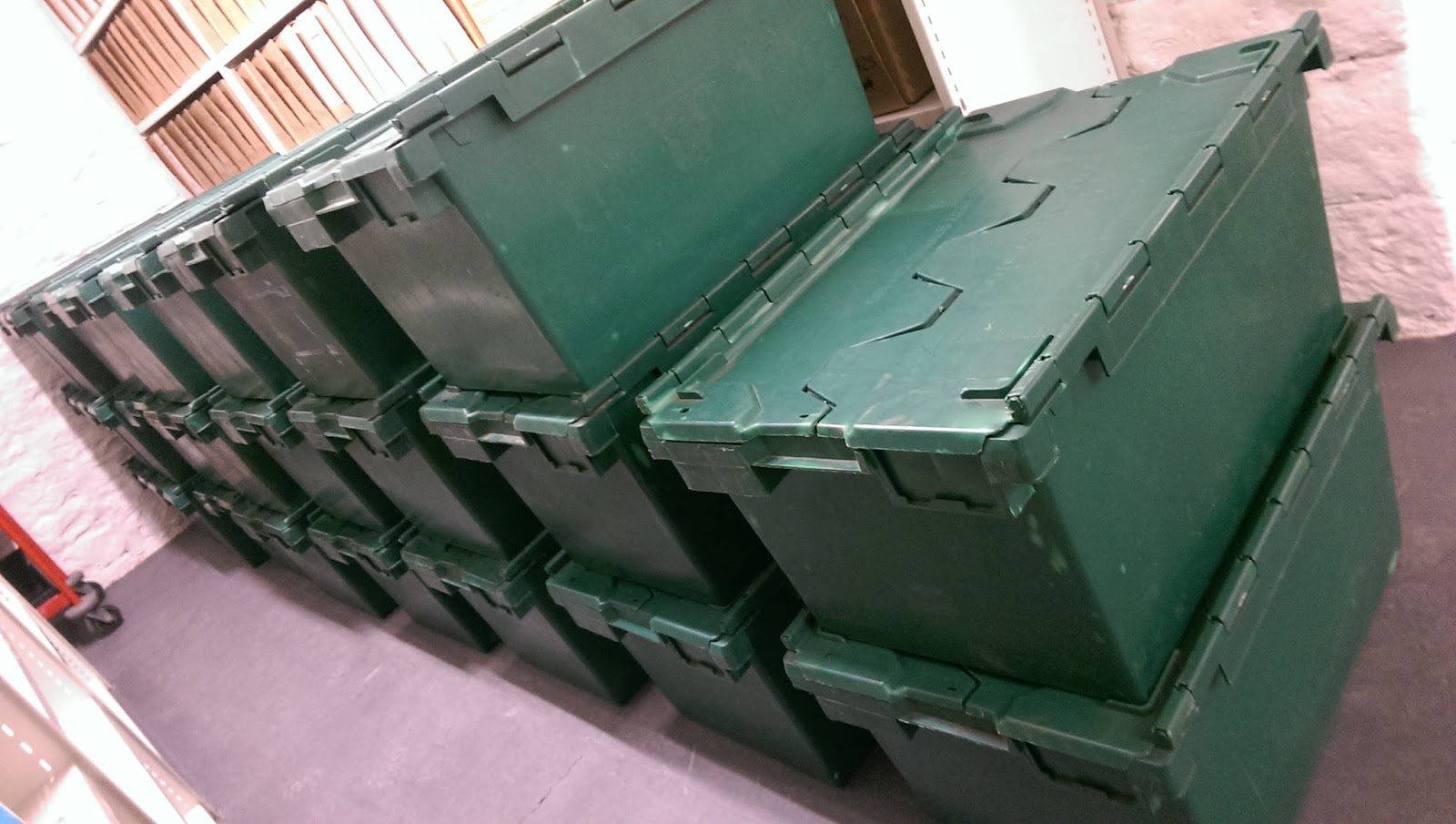
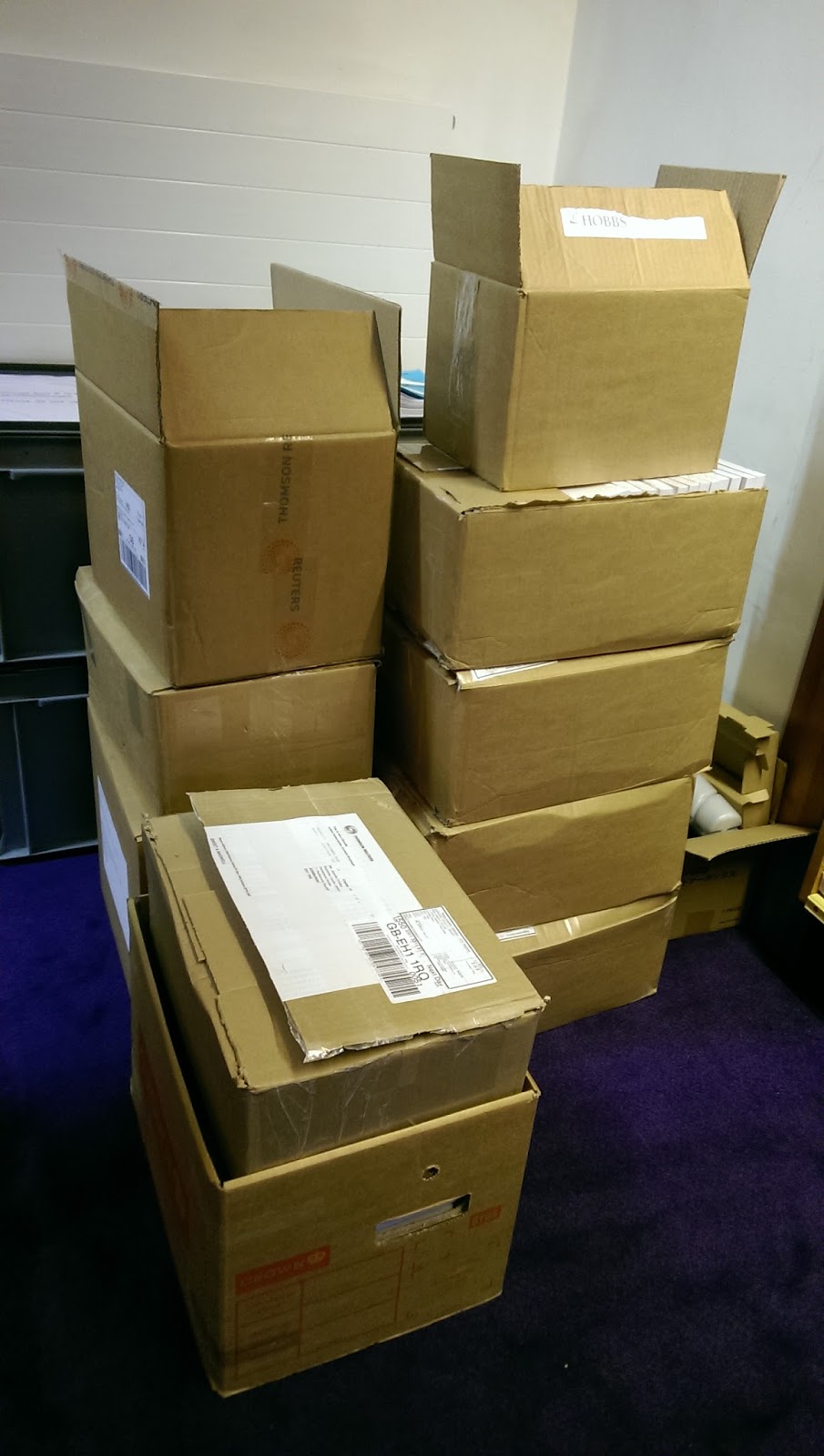
- Cleared 70 large crates of old books out of a basement room. Twice, as various people then wanted some books retrieved, so they needed unpacked, shelved, then repacked. Oh my, that left me so bruised and battered.
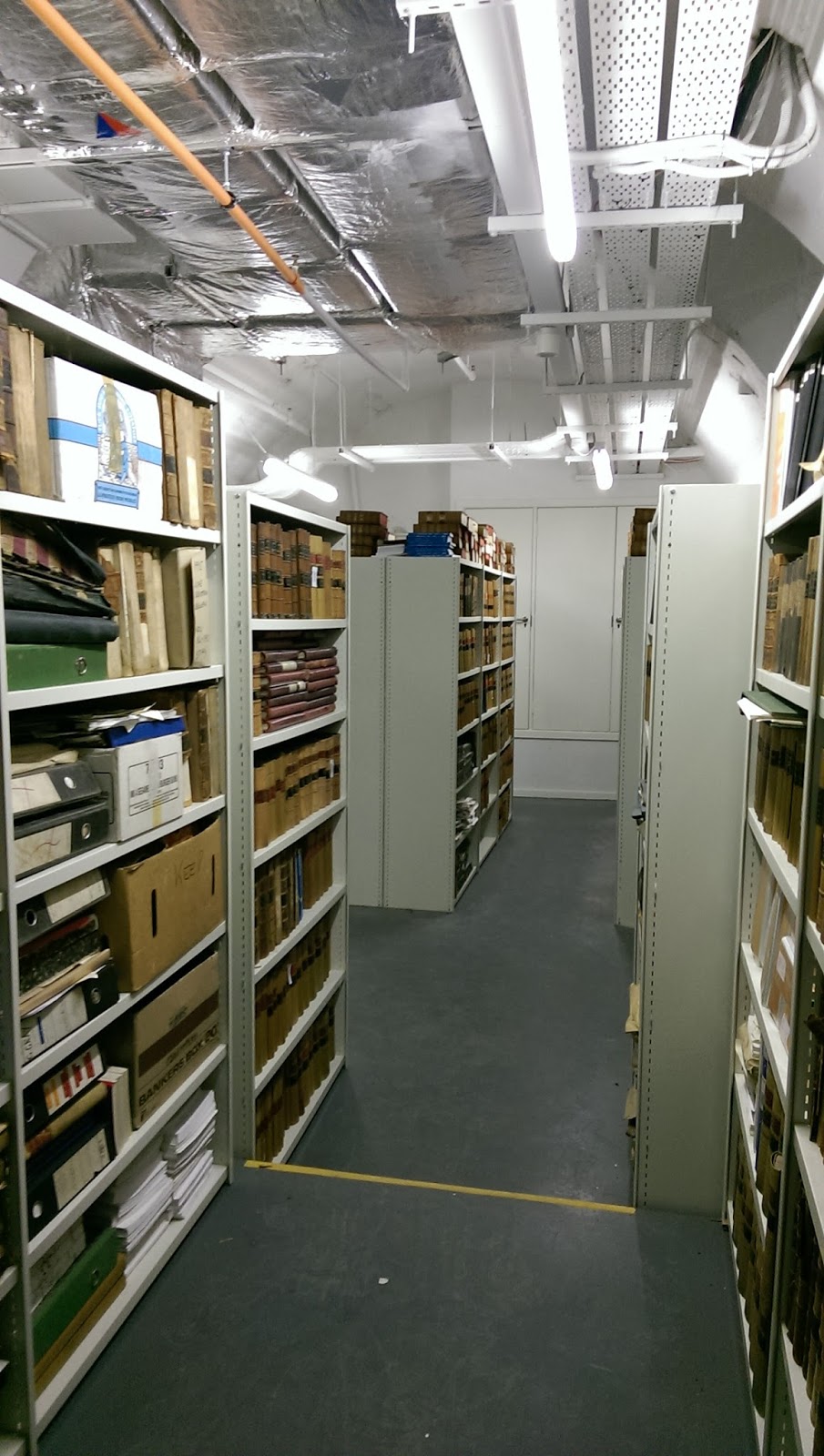
- Cleared 20 crates (and still going) of rubbish from the library office and main library shelves.
- Relocated 10 book trolleys that had been holding surplus materials out of the library.
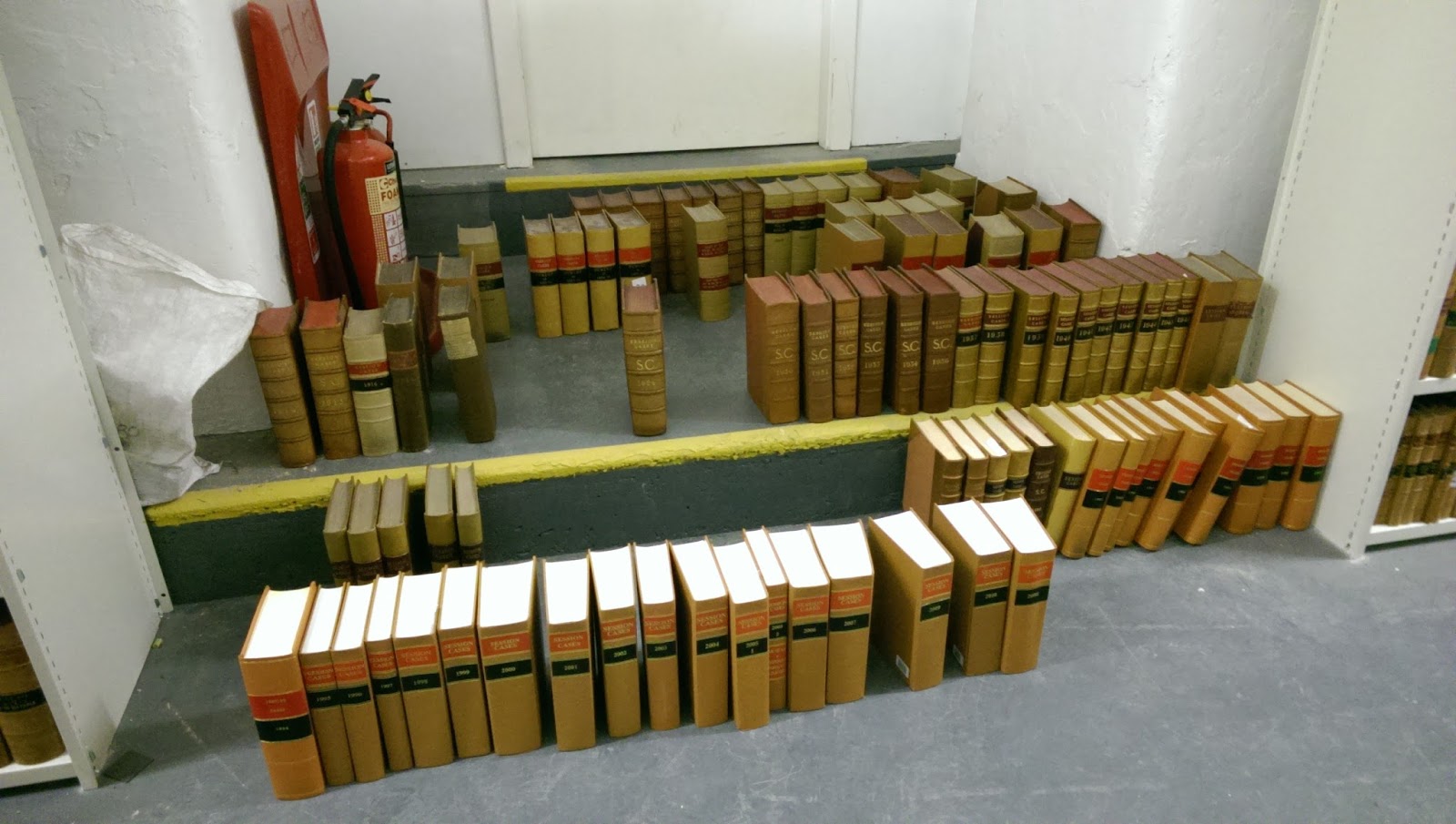
- Created two full surplus sets of 100 year+ runs of a series of law reports, stored them, then moved them. For other people.
- Reshelved thousands of books in a satellite library, myself.
- Visited the Aberdeen library once, the Glasgow library twice, and visited the other Edinburgh library monthly.
Other services
- Drafted recommendations for another part of the organisation on where they need to recruit another librarian (plus two site visits to assess their current setup, and attending meetings to discuss this proposal).
- Giving virtual and in person support to staff partially providing an element of library service elsewhere (this is not actually my job, but…)
- Given support where requested re the stocking with appropriate materials of a newly-created part of the organisation.
- Written a report re feasibility of potential enlargement of certain librarian responsibilities (work in progress).
Hmmmm….maybe this does make it a bit clearer. I have actually been doing a lot. A hell of a lot. And I know there’s loads I’ve not even got on this list because I’ve forgotten. And there’s only me doing this (with, thankfully, a great colleague), but it’s really actually quite a lot for just me to be totally responsible for!






 Dumpling in a Hanky